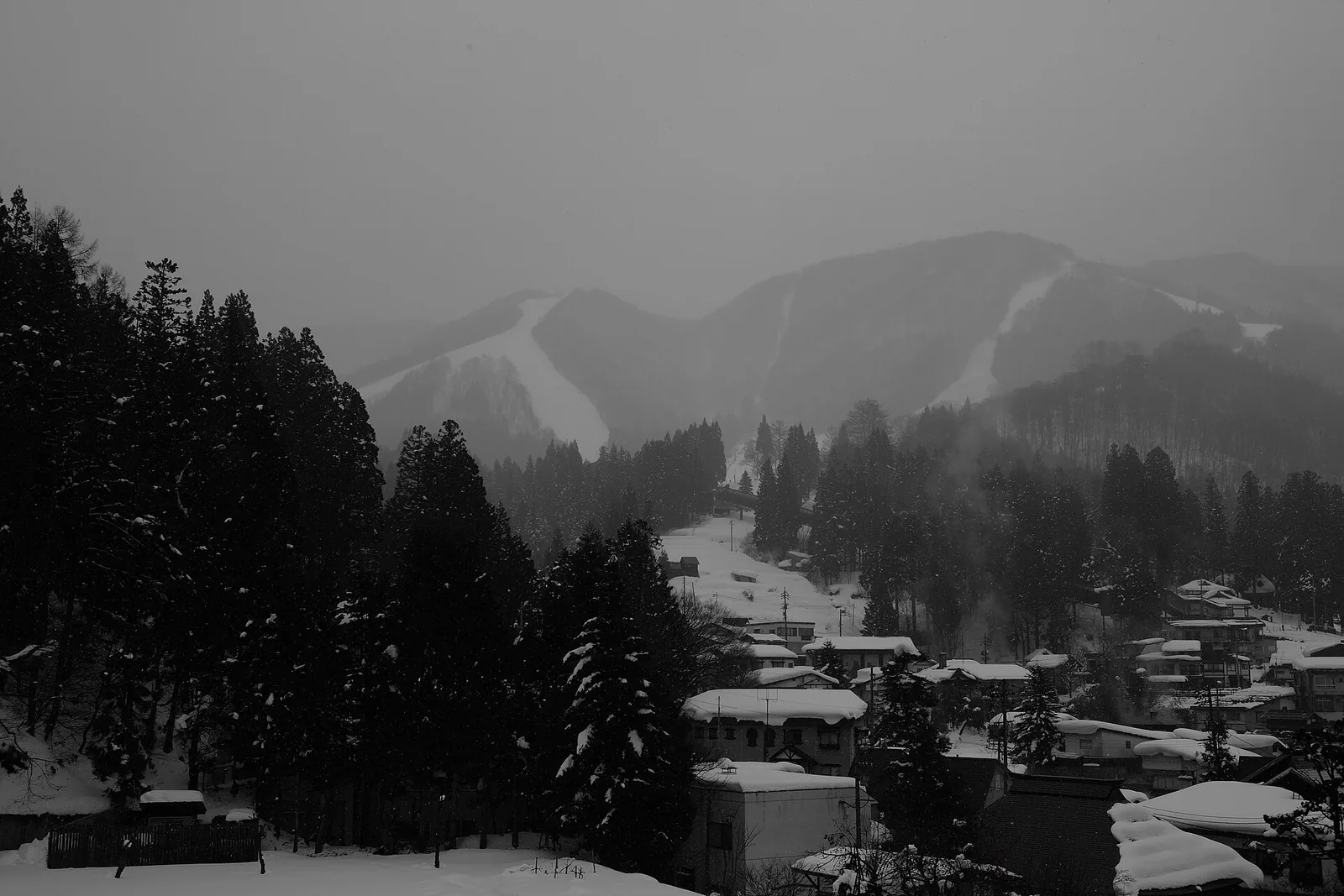
Area reference photograph: winter scenery in northern Nozawa Onsen village and the slopes to the east. Ogama itself is not pictured.Image creditFin 22 · CC BY-SA 4.0Source ↗
Converted to WebP and cropped to the display frame.
01 / TRAVEL NOTES
Hot water for more than bathing
In Nozawa Onsen, hot water has long been useful beyond the bathhouse. Ogama is known as the village kitchen, where local people prepare vegetables and mountain greens. The official guide also describes soaking akebi vines here for basketry: a natural source of heat used in food and craft.
The name Ogama is linked to an earlier use of the water to soften hemp before removing its outer fibres. A visit adds another dimension to the public baths, showing how the springs have supported work as well as bathing.
02 / TRAVEL NOTES
Watch from outside and leave room for local work
This is a place where very hot water rises and local people work. Stay outside the barriers and view it from the surroundings. It is not a bathing facility or a place where visitors can freely cook vegetables.
Keep working routes clear and ask before photographing people at close range. Snow and ice can make the streets slippery in winter; leave time for the walk and wear suitable shoes.
Explore on a half-day away from skiing or with time before your bus. See how the spring is used at Ogama, bathe at Oyu and stop for soba in the village. Decide whether to bring bathing essentials and when to eat before leaving your accommodation.
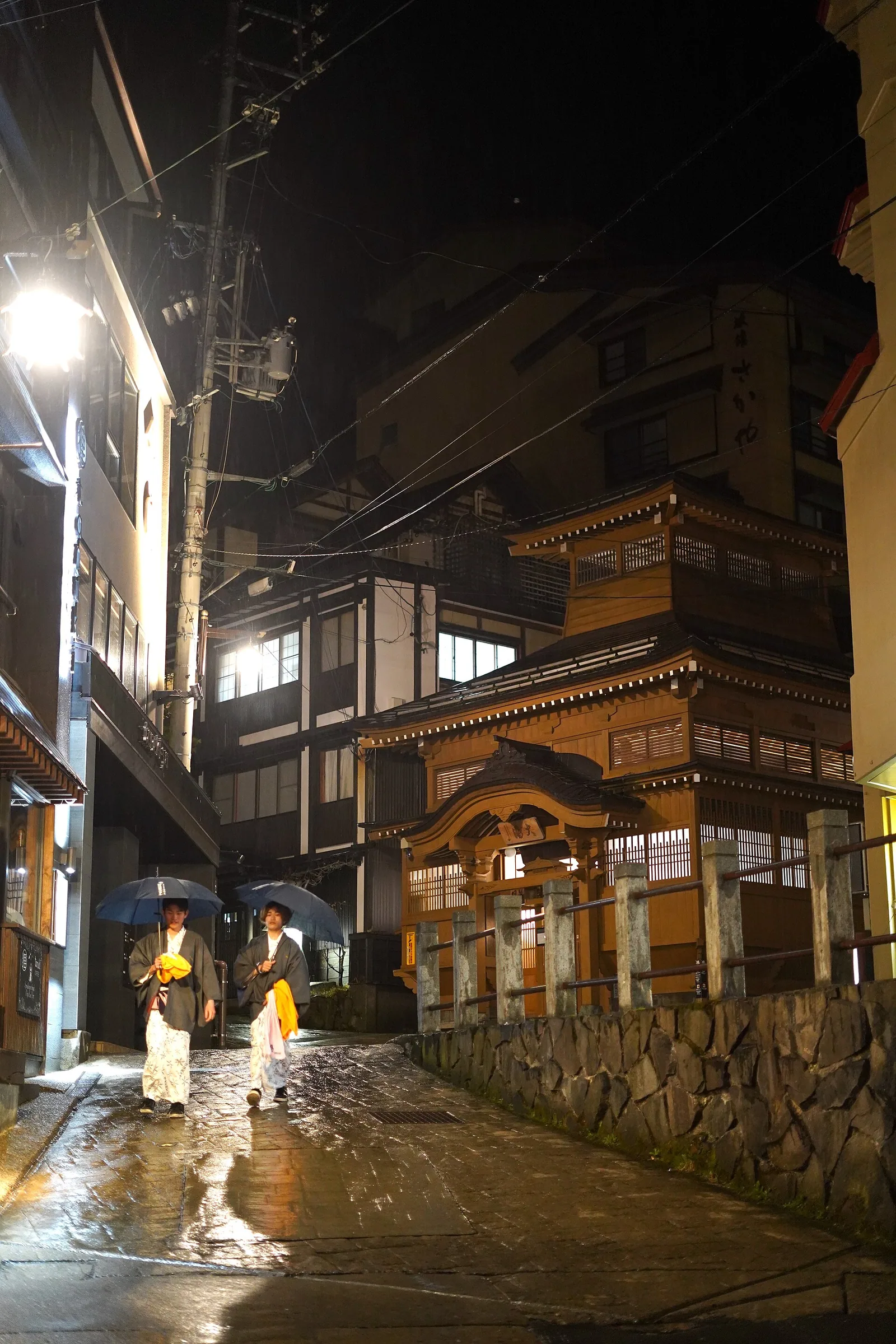
On a rainy night, people in yukata walk with umbrellas outside Oyu in Nozawa Onsen.Image creditZacharymccune · CC BY-SA 4.0Source ↗
Converted to WebP and cropped to the display frame.
01 / ONSEN
Nozawa Onsen Soto-yu: Oyu
Start with the village’s wooden bathhouse. Oyu is a window into Nozawa Onsen’s everyday bathing traditions.